New in October 2026
8-layer processing board, end to end
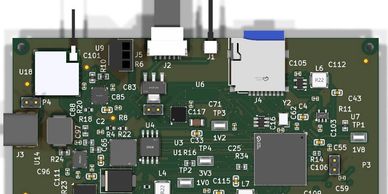
Our STM32N6 processing board, placed and routed by klayout for Sunstone Circuits: 8 layers, 99.9 × 50 mm. KiCad DRC shows 0 errors, 0 warnings and 0 unconnected, and every gate is met.
Impedance is a sign-off gate
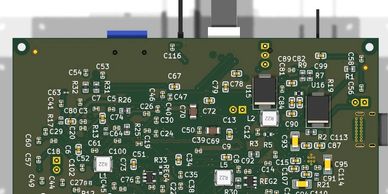
Differential pairs are measured as laid against their target: 100 Ω for MIPI CSI-2, 90 Ω ±15% for USB. The processing board's CSI-2 pairs measure 101–105 Ω. Controlled single-ended lines, such as a 50 Ω coax feed, are widened along their whole length: on this board, 56 Ω became 50 Ω.
Boards that shrink to fit
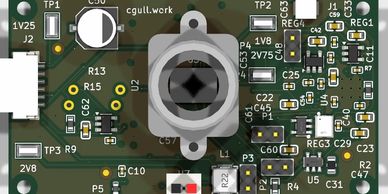
When klayout resizes a board, corner mounting holes follow the outline. Our AR0235 camera head went from 76 × 46 mm to 59.9 × 38 mm, with KiCad DRC still at 0/0/0. Shown: a development revision.
Power first
Each switching regulator's input capacitor is placed at its pins before anything else and never moved farther away, and its links get copper areas. Fiducials are added automatically and kept clear of these hot loops.
Judge any board
klayout --judge BOARD_DIR checks any routed KiCad board, yours or a colleague's, against the same gates klayout applies to its own boards: impedance, DRC added by the routing, and which fabs can build it. Every report also comes as a PDF, including the signal- and power-integrity sign-off pages.
Fab-aware from the start
No board is routed without a declared fab, and vias follow that fab's published drill and ring sizes.
Next release: reflection-based impedance
A short stretch of a pair that is slightly off impedance is judged by the reflection it actually makes at the driver's fastest edge.
Next release: automatic power models
A board without a power model gets one generated, with the source of every figure named (part records, feedback divider, battery cell) and any missing figures listed.
Next release: rail impedance from datasheets
Rail paths are computed from the copper and everything else comes from datasheets, with no assumed values. A rail without data says exactly which datasheet figure it needs.
KLayout
Command-line KiCad in/out

Deterministic autorouter for KiCad: it places and routes complete boards autonomously — multi-layer stackups with automatic power/ground planes, current-aware track widths, and
impedance-controlled, length-matched differential pairs (USB, DDR and MIPI detected automatically) — then gates its own output on KiCad DRC and signal-integrity budgets. It knows real-world fab capabilities,
tells you which vendor unlocks a design your rules can't build, and produces the same board bit-for-bit on any platform from the same seed.
Automatically Places Components

When PCB is not fully placed, it automatically selects best locations for components to meet requirements for:
Differential Pairs.
Non-differential Signals.
Power
Automatically Routes
Matches required impedance per standard and length-matches differential pairs as needed.